Welcome to Uncertainty in Engineering
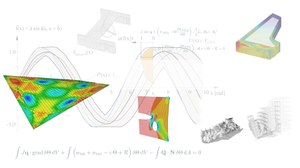
WHO is addressed ?This overview composition focuses on both academic and industrial engineers. Researchers can quickly and easily check the relevance and potential usefulness of selected non-traditional uncertainty models for their current work; lecturers may find some interesting material and inspirations for the education of their students; and industrial engineers have the opportunity to get a first coarse introduction to non-traditional uncertainty models and can select appropriate and viable solution tools for challenging practical problems from a pool of possibilities. WHAT is the benefit ?Selected material from the field of non-traditional uncertainty modeling is presented to supply researchers and engineers with a quick overview and some initial insight into the basics of describing, quantifying, processing, and evaluating uncertainty. Further, the growing demand of the engineering community in this field is served with a pool of solution tools for theoretical and practical problems from diverse subject areas. Also, some inspiration for further research is seeded. |
Most of the material presented on this portal is dealt with in detail in these books. Please click on the images for more information. |
| |
Prospective application fieldsThe presented uncertainty models and algorithms may be available tools for the solution of a variety of engineering problems in diverse subject areas. The examples discussed in the application section give some initial idea of that prospective spectrum. The most significant application fields are probably the uncertain structural (static and dynamic) analysis, the assessment of the robustness of a structure and the design of robust structures, and the safety assessment in view of different types of uncertainty. SoftwareThe algorithms presented on this portal - uncertainty quantifcation, fuzzy analysis and fuzzy stochastic analysis - have been implemented in a software solution. For the Fuzzy Analysis Framework and uncertainty quantification we offer a free license for non-commercial and educational use. Details can be found in the software section. |
Background
| The research results presented herein have been achieved at the Institute of Statics and Dynamics of Structures, Dresden University of Technology (Technische Universität Dresden). This presentation is not a complete survey of the research at the institute but is limited to some selected work in non-traditional uncertainty methods. References listed in the contributions only comprise the most relevant own publications and only those ones from other authors, which have been directly used as a basis for the developments presented. |
|
| The researchers gratefully acknowledge the substantial support of the German Research Foundation (DFG). |